
Custodie


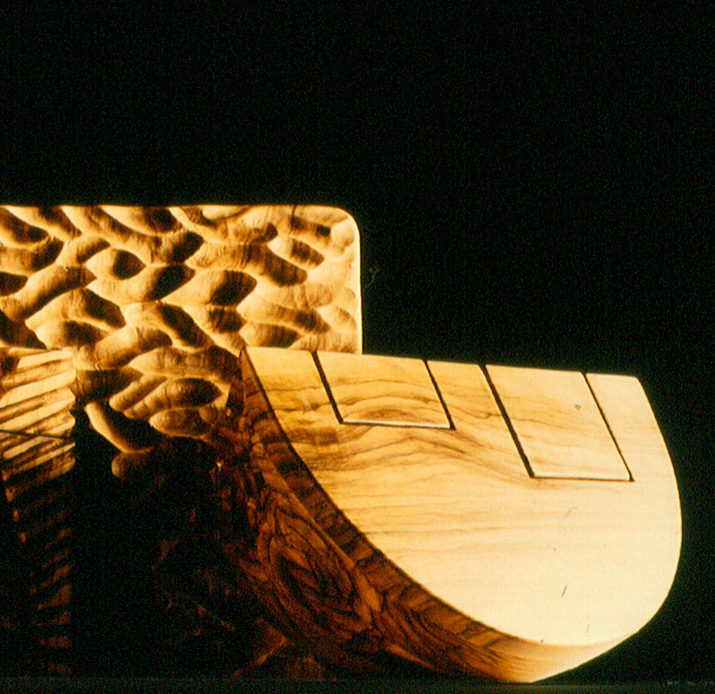


Limited Edition - design Giuseppe Rivadossi
Custodie
Giuseppe Rivadossi, a wood artist of great expressiveness, designed the Custodie collection for Numa.
«The Custodia is a small ark that welcomes and protects our dearest things, it is the wrapping with which we ourselves lovingly envelop objects, the signs of our affections, it is a small gesture in which we recognise our relationship with Creation. The Custodia is the home of our memory, it is a sign of love and a sign of how we ourselves feel loved and cared for. We build these small dwellings with Walnut (Iuglans Regia), a noble and precious wood that is born and lives in our Prealps. We work the wood following very ancient methods and knowledge; a lively sensitivity and great manual skill are the basis of the constructive honesty that guides us. Even in these small containers we want to leave the mark of our vision of life». Giuseppe Rivadossi
True sculptures in wood, worked according to very ancient methods and knowledge, respecting the run of the fibres, the hidden veins and the distinctive character of a wood, the Italian walnut (Iuglans Regia) that Rivadossi knows very well. Arca Serena, Bretone, Carolingia, Dolmen and Vela are five caskets of strong chiaroscuro, hand-worked using the hollowing technique, which Numa offers in a numbered edition of 14 pieces.
The wood used: Italian mid-mountain walnut (prov. Italy), worked from solid wood. Blocks assembled and hollowed out by hand.
Mid-mountain walnut has a particularly beautiful and characteristic structure and fibre colour. It is also stronger and more resistant than lowland walnut. Italian walnut is a rare wood, since it is a very sensitive solitary tree, which does not grow in the forest, but only in areas where it can be tended and protected.
The wood from which Giuseppe Rivadossi’s CUSTODIE are made comes from walnut trees that are about a hundred years old. For the economy of those who lived in the foothill area at the beginning of the last century, the walnut was part of the productive economic cycle as a precious element of sustenance; these were trees that the farmers appreciated for their qualities of resistance and workability, but no less for the fruit they bore, and for this reason they were held in regard, tended and protected.
The wood used for these cases therefore belongs to a civilisation, the peasant one, that has now irretrievably disappeared.


