
Roberto Zani Tells the NUMA Story


Things, names, functions: distortion and alienation.
We are surrounded by so many things, of which we almost never know what materials they are made of, how they are built, by whom and where.
These are things we do not know, or know little, and so, at times, we buy them more for reasons that are “suggested” to us (e.g. advertising) and little out of direct awareness of their true value.
The names of these things are often invented by advertising, they refer to something else, other than the thing in itself: they are foreign to the thing.
Their functions often have little to do with the original (primary) function and refer to conditions, or evoke situations, that are virtual, imaginary.
If these names and these functions are continually repeated by advertising and its slogans, those names and functions become the new name, the new function, the new message.
And, since the companies that make these things must keep producing, they periodically “invent” (change) names and also functions, thereby “consuming” their original meaning, in order to keep producing and to sell the same things (or their variants).
With the aim of getting them bought even by those who already own the previous “version”. Making people “consume” so that production can continue.
(Mis)understanding of Value
Leaving aside, for now, the bewilderment generated in the individual by this somewhat mad way of doing things, when a person has to buy an object and does not know how it is made and whether its meaning/function is still “valid”, he or she faces a thing whose value is unknown. Or at any rate cannot quantify it in economic terms and does not know whether the price to be paid is to be considered fair, adequate.
So it happens that, very often, people are willing to pay the highest price, because they think it is a guarantee of quality, or the lowest one because “it does the same job anyway”.


Elements of comparison
Our companies produce and sell household objects on the free market and must compete with producers from all over the world.
If the comparison and the competition are made on price, our companies, the small and medium-sized companies that, for better or worse, are the backbone of the Italian productive economy, have no future.
The comparison, therefore, must be shifted onto the other constituent elements of objects, so that at least a sustainable difference, a “competitive advantage”, can be determined in the service of overall company marketing.
But this is a subject that concerns, precisely, the economic and marketing aspect of objects and companies.
That is, of a path that pertains, more generally, to the possible application of the results of the project.
The Meaning of Research, the Search for Meaning
Man and his needs
The work underlying our particular research has a precise centrality: Man.
That man who asks himself an infinity of questions, and an infinite question, to which he cannot give an answer: the ultimate meaning of being here on this earth.
But also, and certainly more frequently, more “normally”, that man who perhaps “only” needs silence, to stop and listen, to live his own melancholy without feeling guilty, to seek sweetness, to find enchantment again looking at the sky opening to blue after the storm.
That man who feels and lives within the emotion given to him by the gaze of a woman he knows he will not see again.
That man who needs to forgive himself.
Who needs to be governed by responsible people.
Who needs to swim in the sea early in the morning, to walk in a wood and discover its life.
Who asks to be consoled, who needs light, who needs to share his suffering with others, who wants to rest.
That man who needs beauty.


The research
On his path of search, man also surrounds himself, as he lives, with objects, with things within which, more or less consciously, he seeks answers that go beyond the mere service function they suggest.
He seeks in things a ( their) sense, a (their) meaning.
He seeks the why that comes before, inside things, and perhaps hopes that the things he surrounds himself with can help him find the answer to his questions or, at least, suggest an acceptable balance in life.
That they be in harmony with himself.
The “source” of the research
The “market”, in this particular research, cannot give us indications. It cannot tell us what to build, with which materials and how.
Who will help us, who will “show” us the way?
It will be thought, pain, joy, wonder, melancholy, silence, poetry.
It will be the women and men who, alone or together, live, speak, write, communicate these feelings.
The intuition that will generate the idea will spark where apparently one believes that no things are being built, whereas it is from there that all things spring.
The meeting of women and men who only apparently do not discuss things, these things, will be the assembly from which inspiration will come, the signifier that we shall have to “capture” in the form of things and turn into meaning.
So that things may “speak” by themselves.
New things as messengers of joy, of melancholy, of memory, of mystery, of love, of wonder, of magic.
Things as messengers of beauty, full of beauty.
And so we shall have – perhaps – identified one of the origins of “ design “.
Of true, deep design, the design that comes before, that is inside the idea of things. The design of their feeling, of their mystery, of their magic.


Objectives of the research.
With this work of ours, then, we set ourselves the objective of answering, or trying to answer, the need to fill with (new) meaning, with sense, the things we build, so that, when we wish to make them our own, they help us to create that domestic landscape which each of us tends to build, during our lifetime, in the space of our own dwelling.
Here, then, is the commitment, the research to create things that are feeling, that are presence, that are silence, that are mystery.
That are joy or sadness, that are melancholy, that are magic.
And whose names, within whose names, we can recognise ourselves: may they be ours as well. May they be the ones that suit things, so that they also suit people.
And so the NUMA cases will be our Custodie, “small arks that welcome and protect our dearest things”, made with Giuseppe Rivadossi.
Or the small casket, the result of the work done with Michele De Lucchi for the essay by Remo Bodei, where we shall keep our reflection on the life that hosts us.
It will be the tear chalice in which we shall lay our melancholy, the secret, unspeakable eloquence of our melancholy: our segrete, silenziose lacrime. Which we shall offer with the book of verse born from the encounter with Mario Luzi
Or they will be the vases, small architectures on the metaphor of the tree, from the project made with Mario Botta, in which we shall put the flowers of the gifts received, the flowers of our own gift.
They will be the magical vases of Johanna Grawunder, strong and gentle presences.
Or they will be the extraordinary trays of Konstantin Grcic, of absolute geometry and lightness.
Or the breakfast and aperitif sets by Liliana Bonomi
It will be Offerta again, by Ettore Sottsass, which will become the “offering” on our tables, for us and for our guests.
And so the Scatole Segrete by Ettore Sottsass will be our “secret boxes”.
Which we shall open and close with all the delicacy they ask of us and of which we are capable, because inside them we shall lay our secrets, the jewels with which we adorn ourselves, the presences of our gift, our secret words, our secret thoughts of love.
But they may also be the boxes of colour, made of colour, with the shape of colour.
The Tavole will be our “boards” in which we shall put bread, fruit, the gifts we want to be present on our tables and that we wish to offer to those who are with us and to offer to ourselves. Or boards that are, also, “only” presence in themselves.
They will be boxes in which we shall capture the rainbow or caskets where we shall keep silence.
Or they will finally be simply beautiful things. With the sole function of being beautiful. The beauty that amazes us, the beauty that will help us resist and perhaps will save us.
Conclusions?
Perhaps this work will not produce things to be built on an industrial scale: in truth that was not our primary objective.
It might be enough for us to have succeeded in proposing models of thought, paths for elaborating meaning, forms that accept the challenge of representing them.
And whoever then wishes to produce on a larger scale things of more “normal” use and service may, if they wish, go back to this poetics and be a bearer of its meaning.
They may build things with which to tell the story of their own work, also, if they wish, through ours.
With the hope that whoever buys them may find joy in them and, with them, build their own domestic landscape, their own story.
Roberto Zani


The collections mentioned in the story

Metallia
Tamar Ben David, Liliana Bonomi, Giovanni Levanti, Ettore Sottsass, Marco Susani e Mario Trimarchi
Pewter becomes surface, volume and narrative. A collective project bringing designers’ research into dialogue with an artisan’s knowledge of the material.
Explore the collection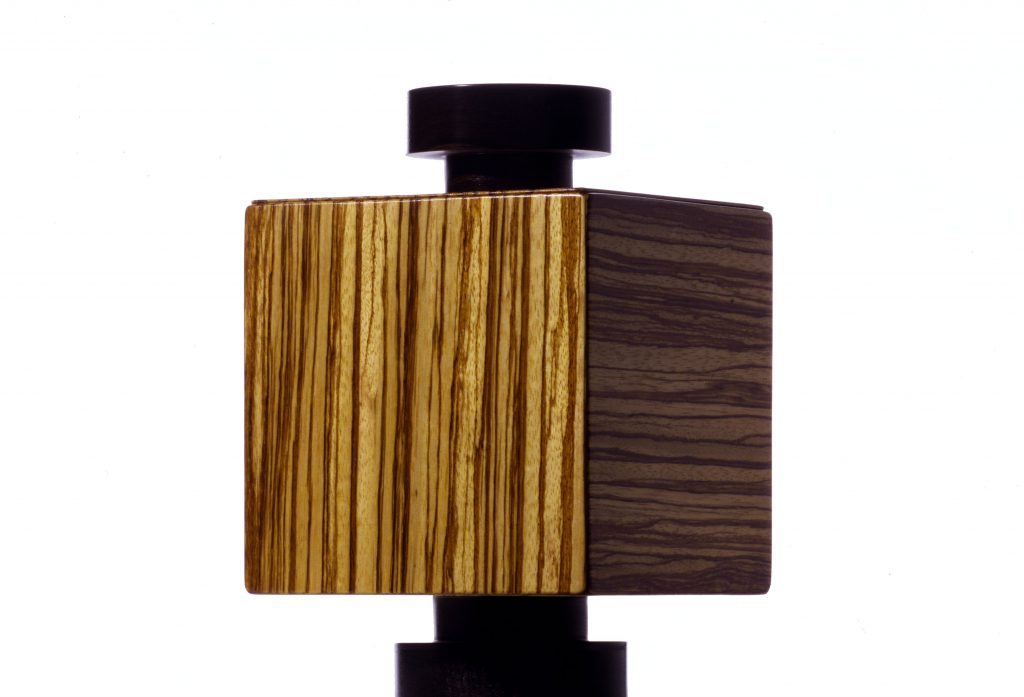
Scatole Segrete
Ettore Sottsass
Five small wooden architectures designed to hold objects and personal memories. Agata, Agnese, Rosalia, Teresa and Zita explore gesture, form and colour.
Explore the collection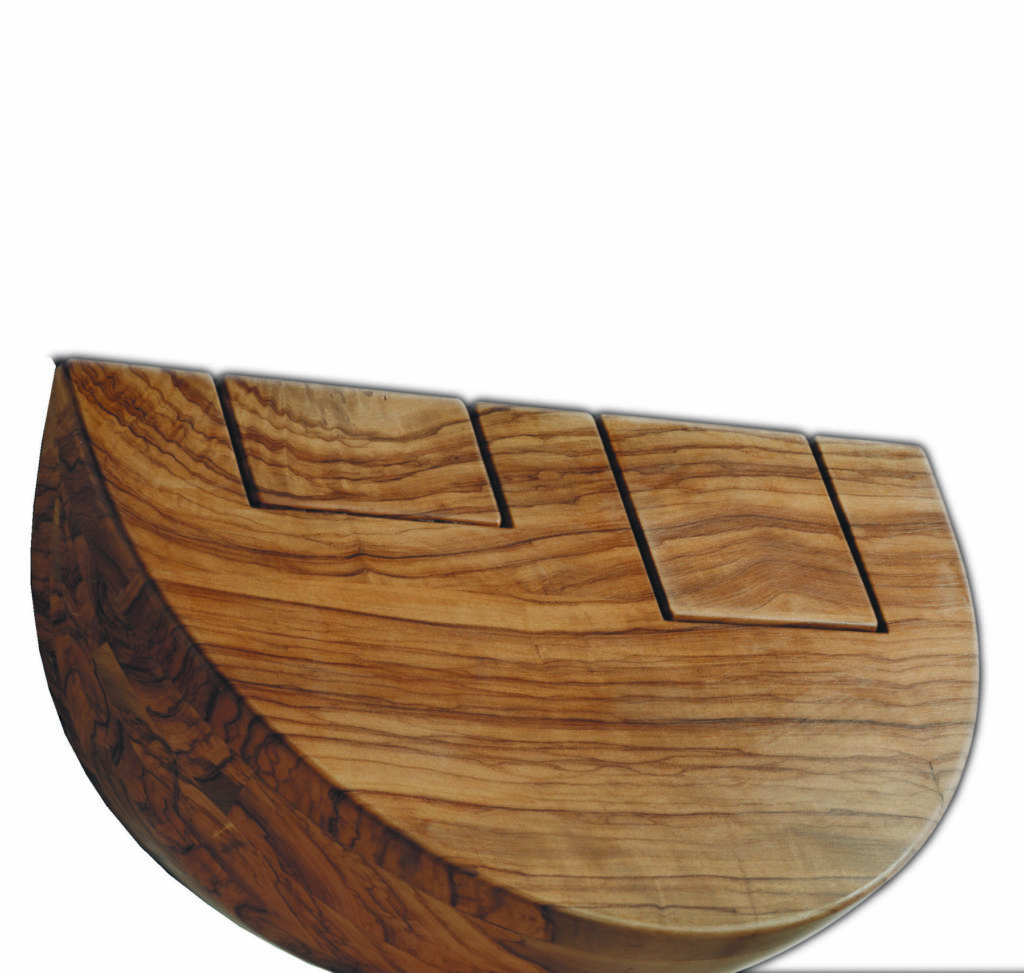
Custodie
Giuseppe Rivadossi
Hand-worked walnut becomes a home for treasured objects. Material and carving express Giuseppe Rivadossi’s vision.
Explore the collection
Tredicivasi
Mario Botta
Pewter tabletop architectures exploring volume, proportion and light. Mario Botta’s design takes shape through skilled handwork.
Explore the collection
Tavole
Ettore Sottsass
Centrepieces in which pewter also meets blown glass. Forms that give presence and meaning to the rituals of the table.
Explore the collection
Just For Flowers
Ettore Sottsass
Six single-stem vases interpret pewter through sculptural forms. One flower connects the object with everyday life.
Explore the collection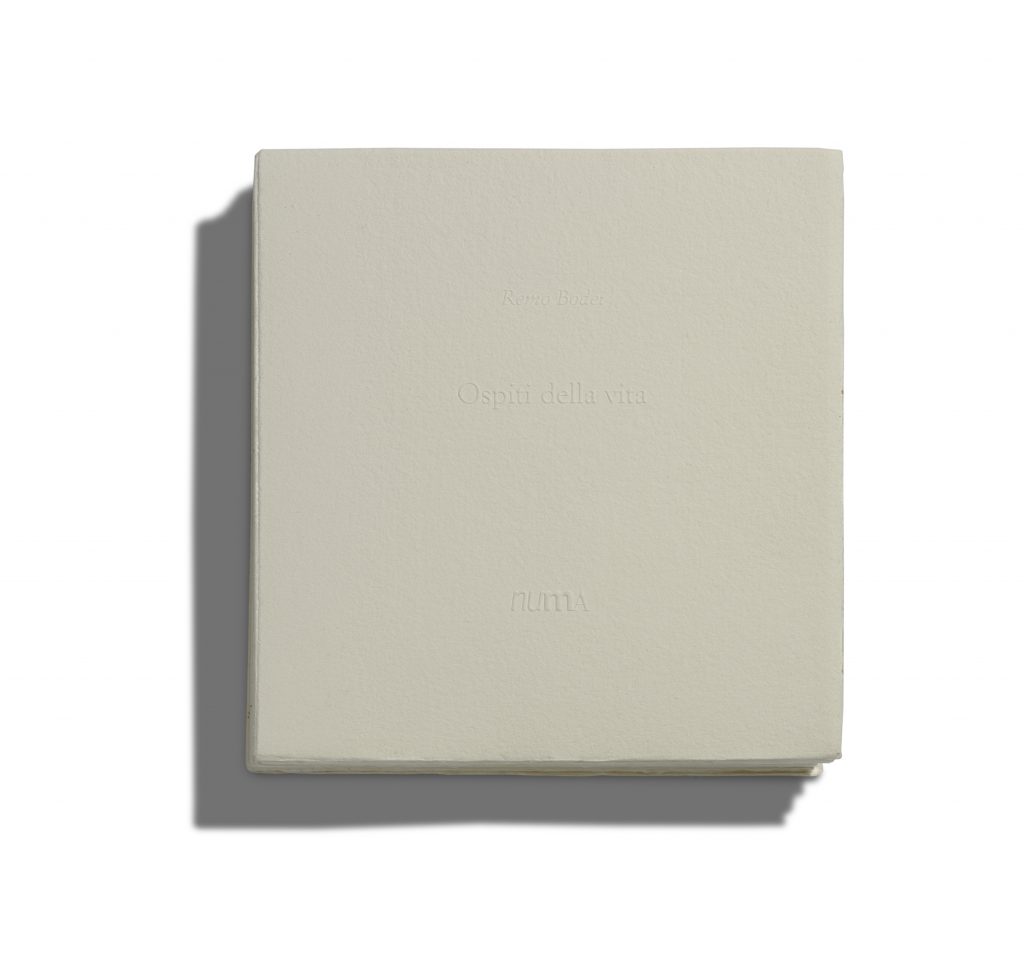
Ospiti della Vita
Remo Bodei, Michele De Lucchi, Giuseppe Rivadossi
An encounter between thought, book and object. Remo Bodei’s text enters into dialogue with cases designed by Michele De Lucchi and Giuseppe Rivadossi.
Explore the collection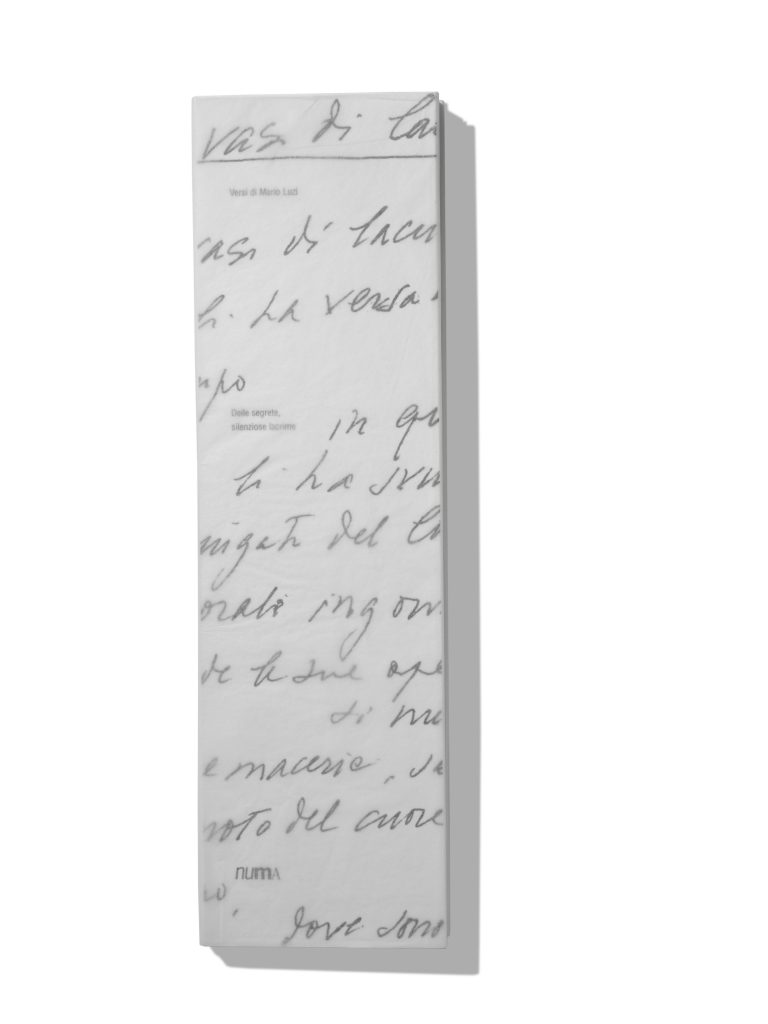
Delle segrete, silenziose lacrime
Mario Luzi, Ettore Sottsass
Poetry and design meet. Texts by Mario Luzi and the chalice designed by Ettore Sottsass create a story to read and contemplate.
Explore the collection